What Actually Happens During Stump Grinding?
Stump grinding is not stump pulling, and the difference matters for your yard. Here is what the machine does, how deep it goes, what is left behind, and what you can plant afterward.
3 min readRooster Tree - Lawn Services
People often ask for a stump to be "pulled out." Almost always, what they actually want is stump grinding — and the difference is the reason your lawn survives the process.
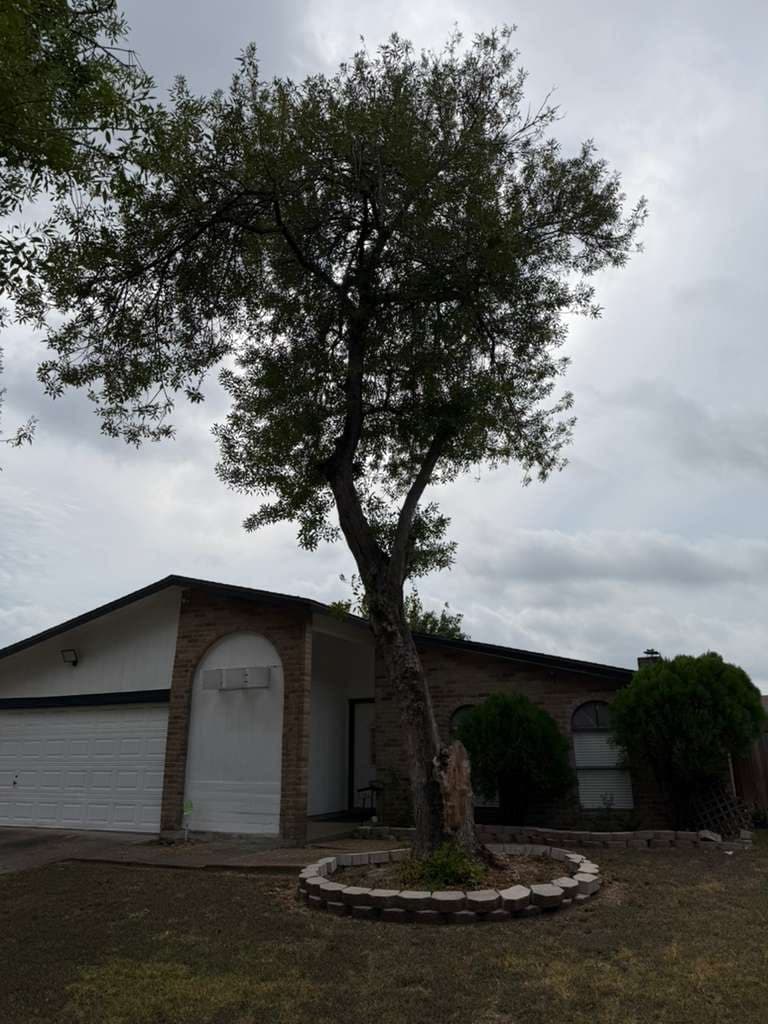
Grinding removes the stump without excavating it. A wheel with carbide teeth cuts the wood away in layers until the stump is below ground level. What is left is a hole full of chips, not a crater with a root plate sitting next to it.
Why not just pull it out?
Pulling a stump means dragging the root plate up through everything it is attached to. On an open lot with nothing around, that is an option. On a finished yard it means torn-up lawn, disturbed driveway and walkway edges, and a hole that needs far more fill.
Grinding leaves the surrounding ground where it is. That is why it is the normal approach on any property you actually have to live on afterward.
How the job runs, step by step
1. Clear and check the area
We move what is around the stump and look for what should not meet a grinding wheel: rocks, old brick or concrete edging, sprinkler heads, buried pipe. We also confirm where utility lines run before anything spins up.
2. Cut the stump low
If the stump is still standing tall, it comes down close to the ground first. Less material above grade means less grinding and a cleaner finish.
3. Grind below grade
The wheel passes across the stump in layers, working down past ground level. This is the part people picture when they think of stump grinding, and it is usually the quickest part of the job.
4. Follow the surface roots
The stump is not the whole story. The roots running just under the surface near it will keep breaking down for years, and as they do the ground above them sinks or lifts. We grind those out too, so a new lawn does not develop soft ridges six months later.
5. Backfill and clean up
Grinding produces a surprising volume of wood chips — more than the stump looked like it could hold. We use what is needed to fill the hole, rake the area level, and haul the rest off.
6. Put the spot back to work
Once it is filled and level, the spot is ready for whatever comes next: topsoil and sod, a mulch bed, or planting. Because we do the lawn side as well as the tree side, that can happen on the same visit instead of waiting for another company.
What the area looks like afterward
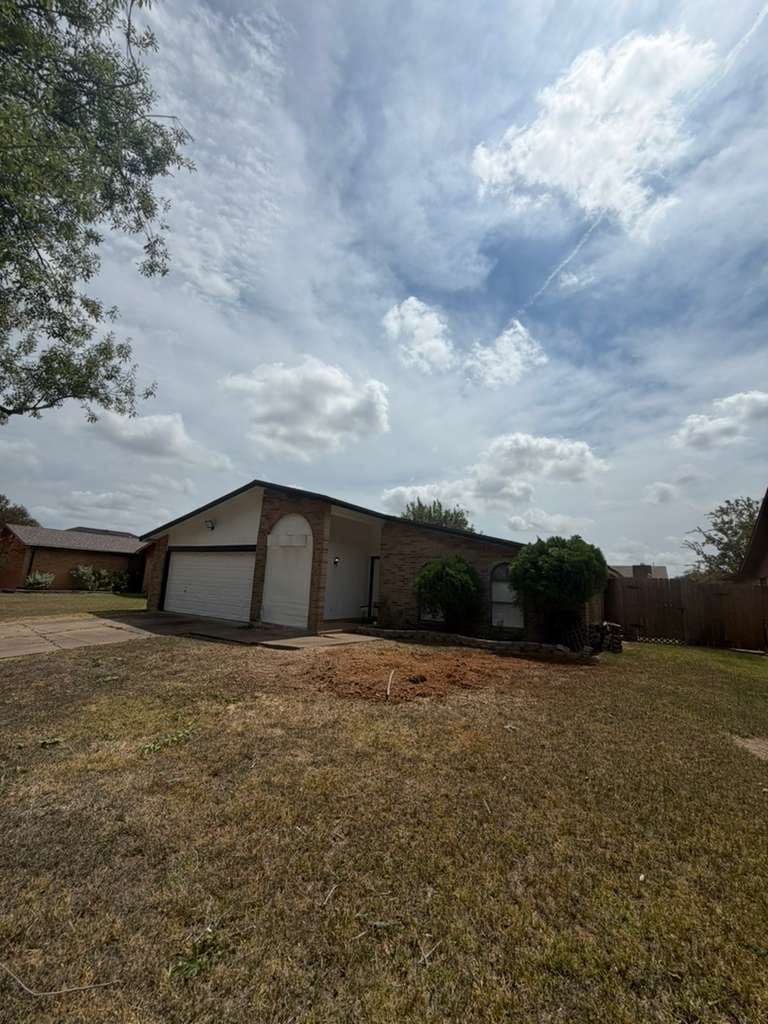
Level ground, filled with a mix of soil and ground wood, ready to be topped with soil and planted. Not a hole, not a mound, and nothing left to mow around.
That last part is the actual point of the job. A stump left in place is something you steer the mower around every week, and something that keeps sending up suckers.
Stump grinding is one of our core services, and it pairs with tree removal on most jobs. If you have a stump — from our work or from a tree someone else took down — ask for a free estimate or call (832) 989-8795 during regular hours, 7:00 AM to 7:00 PM.
Common Questions
Frequently Asked Questions
How deep do you grind a stump?
Below ground level, and deep enough that you can put soil and grass back over the spot. How far down depends on the tree and what you want to do with the area afterward, which is one of the things we confirm before starting.
Why grind the stump instead of pulling it out?
Pulling a stump takes the root plate with it and leaves a crater that disturbs the surrounding lawn, driveway edges and anything else nearby. Grinding removes the stump without tearing up everything around it, which is why it is the normal approach on a finished yard.
What happens to all the wood chips?
Grinding turns the stump into chips. We use what is needed to backfill the hole and haul the rest away, so you are not left with a mound of debris in the middle of the yard.
Can I plant grass or a new tree where the stump was?
Grass, yes — once the hole is backfilled and levelled, the spot takes topsoil and sod. A new tree in the exact same position is a different question, because ground-up wood and leftover roots are still breaking down there. Tell us what you want to do with the spot and we will factor it into the estimate.